6 March 1966

I got married in February in New York City, with a cocktail party at the Plaza Hotel on 59th street. I took my bride to Greece for our honeymoon. When I decided that I had to get back to VR-3, I told my new wife to stay in Greece for a while because I thought I would have to go out on a trip to Vietnam. It didn’t turn out that way, because instead of going west, I got sent to the east.

We left McGuire on the 6th and we flew over Lajes to Rhein-Main and got there on the 6th. On the 7th we flew to Chateauroux and back to Rhein-Main.

On the 8th we flew to Wheelus AB and then to Athens for a layover. On the 9th we did a Turkey trot. We went to Istanbul, Yalova, Incirlik and Ankara before we got back to Athens, for another layover.

On the 10th we went to Iraklion and Souda Bay, on Crete, then Wheelus and then Chateauroux. We were there on the 11th and on the 12th we started the Italy trot. Aviano, Pisa, Naples and Brindisi. From there we went to Athens for a layover. It was the 13th.

On the 14th we left Athens for Nicosia and Tel Aviv and we got back to Athens for our layover. The next day we would make a trip to Iraklion, Crete and I wanted to take my wife on the trip. So, when we came out to the airport on the 15th, I let her ride with the loadmaster and he got her on the plane.

Tom Stringer was my navigator and we filed to go to Crete via Visual Flight Rules (VFR). As we left Athens, we went down to a low altitude and flew to Crete. My copilot got a little bit scared about our running into an island, but Tom was on the radar and that was not going to happen. Well, when we got to Crete we realized that the unloading of the airplane was going to take a long time because of the cargo that was on board. Tom and Joann and I took a cab to see the grave of Nikos Kazantzakis.

When I was a student at Rensselaer Polytechnic Institute, RPI, I wrote a thesis on “The Concept of Individualism as Portrayed by the Odysseus Figure in Literature.” On of the books that I used in that thesis was: “The Odyssey a Modern Sequel” written by Kazantzakis. Here is a picture of his grave:
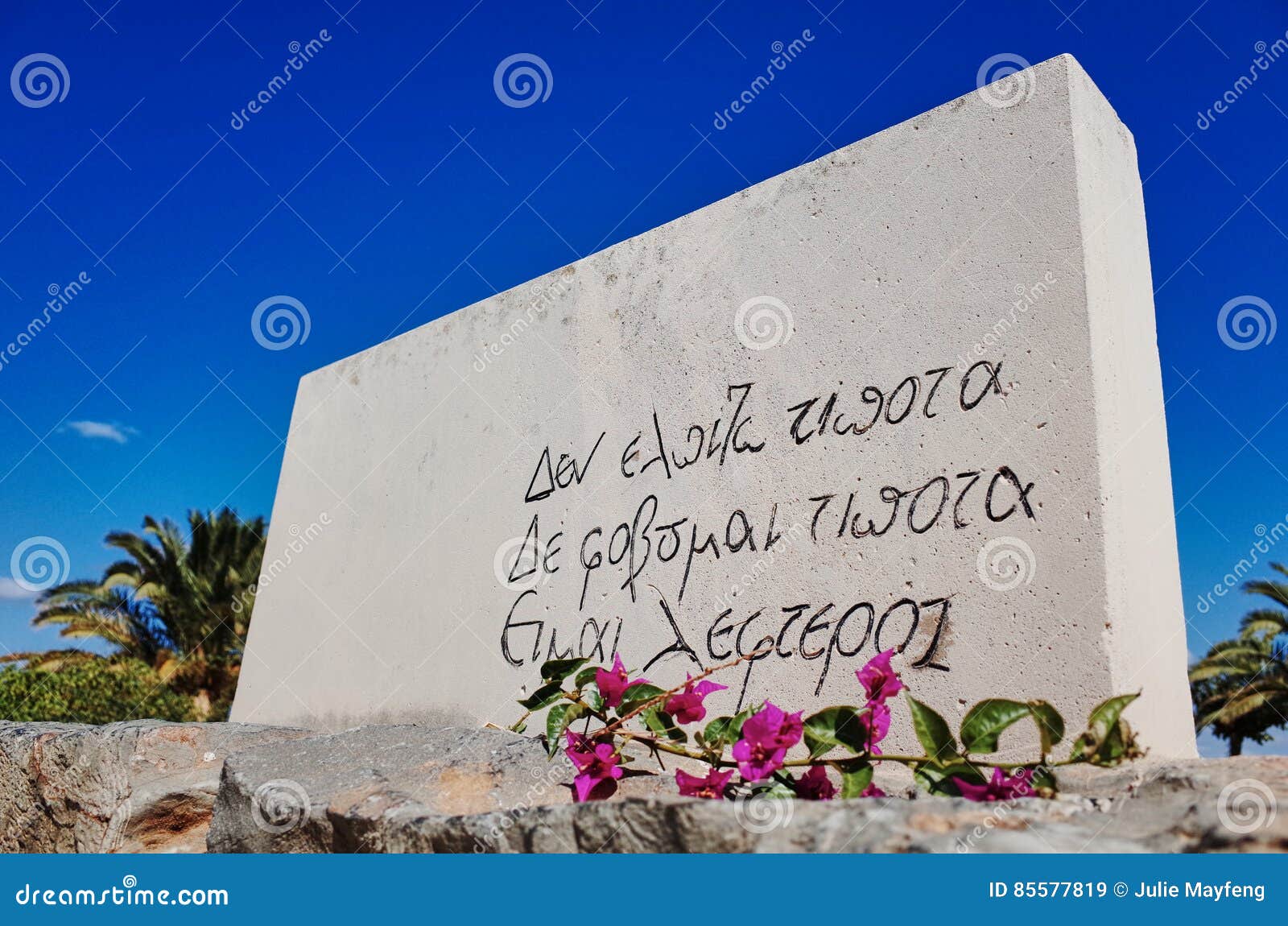
It says: I don’t hope for anything … I’m not afraid of anything… I am free.

We got back to the plane and left for Athens. Dropped Joann off and we went on to Brindisi and Naples before we got to Chateauroux. We spent the 16th and the 17th there and we left on the 18th. We went out to Tehran and Karachi, Peshawa, and Lahore in Pakistan. We had a longish time on the ground in Lahore, so we went to the airport restaurant. Sitting outside on the patio deck, I looked at the menu for something to eat. With the years that Britain had spent out there, the menu said: Fish and Chips. With that I drank a mango squash. While we were eating, a bagpipe band was marching on the airport apron and practicing their marching and playing their instruments. Oh, Britania.

Well, we got back to Incirlik on the 19th and we left on the 20th, with the intention of going to Chateauroux. As we were climbing out of Incirlik, at about 20,000 feet, we had a problem with one of our generators. The generators on a C-130 could not be de-coupled from the engine, so, when you had a generator problem, you had to shut down the engine. Well, I did that, while still in Turkish airspace, but I didn’t report it. I continued on the flight plan and flew into Greek airspace. Then, I told the controller that we had shut down an engine and that we wanted to divert to Athens. Which we did, for another Athens layover on the 20th.

They put a new generator on the plane and we were scheduled to go to Cigli, in northern Turkey. I had gotten a line check from a Check Pilot, from McGuire to Rhine-Main on the 6th of March. I had a set of his check papers with me in Athens. Well, I have a first cousin named Nick Karis. His mom and my mom were sisters. Well, Nick had a first cousin from his father’s side of the family named George Vavides. George was born in America, but living in Athens at this time, studying how Greek Ancient Theater plays were produced. I called him and asked him if he wanted to come for a flight with me. He said: “Sure”. I gave him a flight suit and a hat to wear and the check captains orders to carry and told him not to say anything and just stand around and watch me do what I did in the office, at the airport in Athens. He was a professional actor and theater person, so that was not a problem.

Well, we went over to Cigli and got off the plane to refile a flight plan to go back to Athens. Unfortunately, there was a lot of hydraulic fluid leaking under the left hand wheel well and it took the mechanic some time to get that dealt with. Meanwhile, Tom Stringer had come down with a cold and we headed to the officers club at Cigli. I didn’t need a navigator to get to Athens, so I told Tom he should have a drink. We were all standing at the bar with a US Air Force Colonel. We were in our flight suits and Tom shot down a couple of glasses of whisky. The Colonel didn’t ask any questions and we left for Athens.

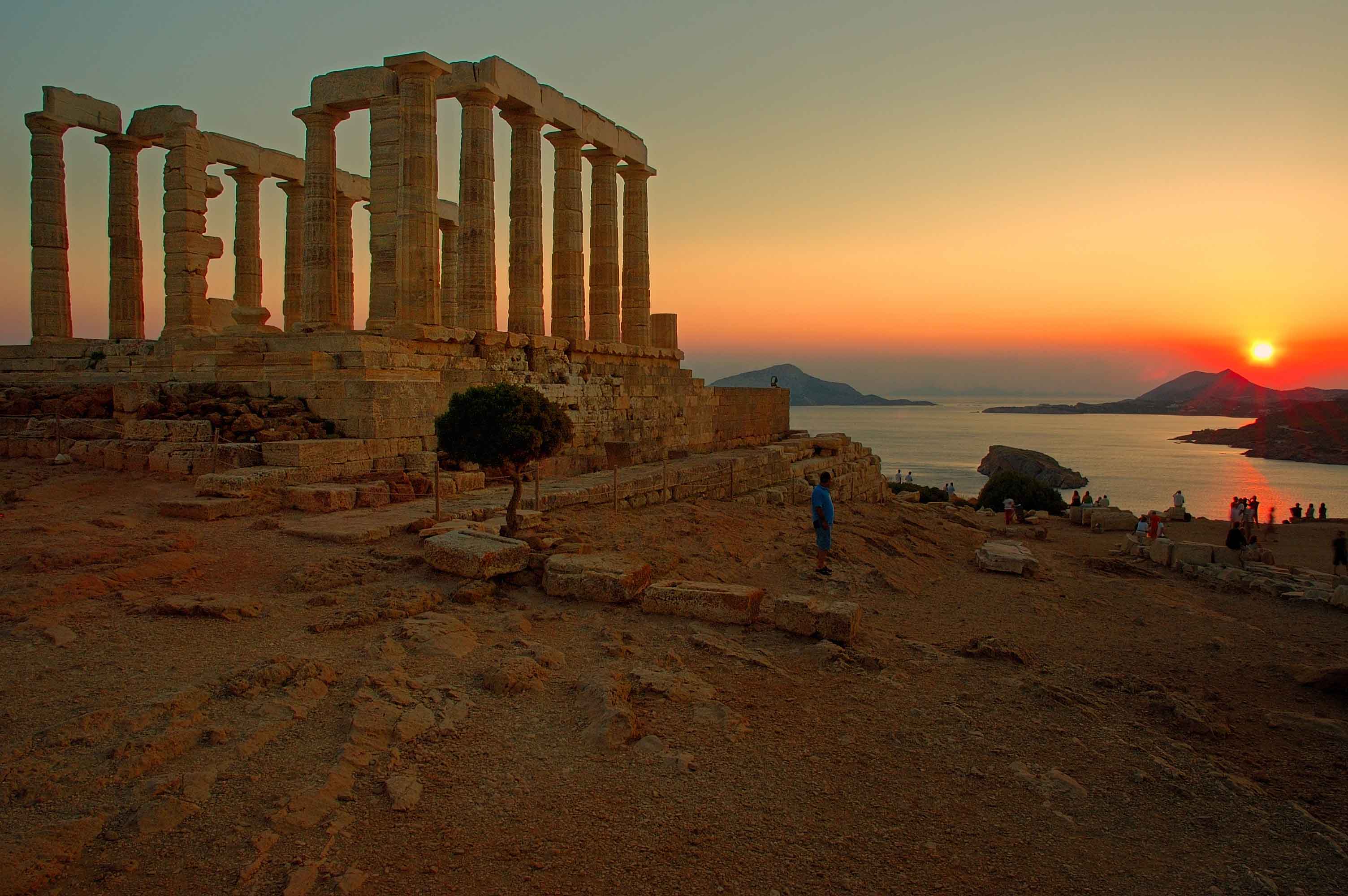
As we were approaching the old Athens airport, down by the water, we were going to fly over Cape Sounion. Well on Cape Sounion there is an Ancient Greek temple to Poseiden, the Greek god of the sea. It is a Doric temple built 444 – 440 BC. As we were overhead the temple, I lowered the wing so George could see it and we were talking about it. Here is an image of it in the setting sun:
Well, caught up with the sight seeing, I forgot to start my descent into Athens. I quickly got going, on getting down for the landing and Athens told us to call passing over the radio beacon at Bouligeameni, just 2 miles from the airport. When we passed the facility, my copilot reported it and the Athens tower said: “I don’t see you.” I told the copilot to say: “Look up.”

With the C-130 you can do interesting things and getting down for a landing is tricky but easy enough to do. I pointed the nose of the plane at the beginning of the leading lights for the runway and just waited till I got to the altitude to stop the descent. I pulled up a little and made a very good landing. The tower operator said: “Wow.”

On the 22nd we left Athens for Ankara. Here is an image of the old Athens airport:

If you look carefully at this image, and if you know it, the commercial terminals were close to the road that runs along the sea. On the far side of the airport are the military hangers. When the runway was elongated, the military side built a taxiway to the end of the runway. On the civil side, there was a taxiway that made you go onto the runway, taxi to the end and turn around for takeoff.

On our last takeoff from Athens we were at the end of the taxiway at the end of the runway. In the taxi block on the civil side there was a Lufthansa flight wanting to leave. The Lufthansa copilot called in for permission to taxi on the runway, to go to the end and turn around. The Athens tower screamed: “Hold your position.” About a minute went by and the tower told Lufthansa they could now taxi on the runway. As they were coming down the runway to the end, the Captain, in a deeper voice asked the tower: “Can you tell me the difference between now and a minute ago.” My copilot hit the mike and said: “60 seconds, Captain.” The tower gave Lufthansa takeoff clearance and he left. That happened 55 years ago, but I have never forgotten how quick witted that copilot was.

We went to Ankara and then to Chateauroux. We continued to Lajes and Charleston and then back to McGuire. We got there on the 24th.

17 July 1966

We first landed in Chateauroux and laid over there. The next day we landed in Germany at Rein Main Airport in Frankfurt. We went up to Fornebu airport in Oslo, Norway. Here is a view:

We came back to Rhein-Main and then went back to Chateauroux. We were there until the 20th and then we went through Athens to Tehran. We got back to Chateauroux on the 22nd.

We left Chateauroux on the 24th and we were going to make a series of stops in Italy enroute to Athens. My wife was in Athens at this time and my crew knew that. Well, my copilot was Jingels Devine. We went into the Aviano airport and we left for Pisa. When we were ready to leave Pisa, Jingels was ready for takeoff and he briefed that if he lost an engine on takeoff he would leave the gear down and circle back for a landing back into Pisa.

Well, we started down the runway and just as we were ready to lift off, we got an engine fire warning and had to shut an engine down. The fire light went out and the engine was stoped.

I told Jingels to clean the airplane up, that means lift the gear and take in the flaps, and told him to fly into some clear sky towards the west. I re-filed the flight plan to return to Chateauroux. So, instead of putting the aircraft down in Pisa with an engine problem we got it to the main base in Europe. The Air Force was very happy about that.

Then, when we got to the Airlift Command Post, the Officer in Charge said we had two choices: Go into a layover for eight or more hours or continue with our trip to Athens with a stop in Naples. I left it up to the crew and they all voted to go on to Athens. That’s what we did and we laid over in Athens on the 25th.

On the 26th we flew to Istanbul and Brindisi and back to Chateauroux. We layed over there on the 27th and on the 28th we left for Spain. We went to Madrid, Moron, Rota and Torrejon and then we went back to Chateauroux.

We did the Italy trot: Aviano, Pisa, Naples and Brindisi. Then we went to Athens and laid over again. On August 1st we went to Nicosia, on Cyprus and then to Tel Aviv, Israel, back to Incirlik and back to Athens for another layover.

We left Chateauroux on the 3rd and went to Pisa and Naples and back to Chateauroux.

On the 4th of August we flew to Lajes in the Azores and then back to McGuire. Here is a view of Lakes:

2 November 1965

We had left McGuire on October 24th and after our October flying we arrived in Chateauroux on October 30th. Now, from Chateauroux we had to fly to Wheelus AB. You can read about Wheelus Air Base here:

https://en.wikipedia.org/wiki/Wheelus_Air_Base

“In September 1969 King Idris I was overthrown by a group of military officers centred on Muammar Gaddafi. Before the revolution, the US and Libya had already reached agreement on US withdrawal from Wheelus. This proceeded according to plan, and the facility was turned over to the new Libyan authorities on 11 June 1970.[5]

We went in and out of Wheelus AB pretty frequently, but I never laid over there. This time I left Wheelus for Athens. Enroute, I had a five year old boy sitting on my lap when we passed over an Aircraft Carrier. I rolled up the plane so he could see the carrier. I asked him if he wanted to land on it and he said: “Yes!”

We flew in and out now Athens and around the Middle East for several days and we landed in Yalova. We had to fly low over the field to drive the sheep or goats off the runway. There was just a single runway in 1965. Here is an image of Yalova today.

You can see Istanbul to the north, across the Sea of Marmara. One night, I was in Istanbul and I needed to fly to Yalova. The ceiling was 700 feet. There was only an ADF navigational radio at Yalova and the minimum you could descend to was 1100 feet. I could not fly there on an instrument flight plan. I decided to go VFR, that means Visual Flight Rules and went into the IST operations office to file for a VFR flight. The Major looked at my papers and said: “Don’t you know you can not fly VFR at night from Istanbul? You have to file for SPECIAL VFR flight.”

I said, “How do I do that?” He answered, pointing to my paper, “Put Special here.” So, I added SPECIAL in front of VFR and he approved my flight.

So, I flew a Special VFR flight from Istanbul to Yalova at 500 feet and landed at Yalova at night.

Finally, we got back to McGuire on November 11th.

27 October 1965

We departed McGuire on the 24th. You can read that post. But on that trip we ended up in Chateauroux and when we left, we flew to Incirlik, Turkey. As we got ready to leave Incirlik, we discovered that the starter for our #3 engine would not function. I decided to go out on the runway and taxi down the runway, spinning the prop on the engine that wouldn’t start normally and start it on the runway.

Our first stop out of Incirlik was Beirut, just across the Mediteranean. Well, we dropped off our cargo and loaded what they had for us and then we started three engines and taxied to the runway. Take a look at the Beirut airport. notice how the runway goes right out over the Med.

We got to the runway and got cleared for takeoff. We started rolling down the runway and we started the engine on the roll. The tower operator said: “I think one of your engines is not running.” My co-pilot said: “Keep looking.”

The engine started properly, I brought it up to full power and we made an uneventful takeoff. I did not have any problem with this maneuver because the C-130 had lots of power and we could have lifted off the ground with just three engines.

From Beirut, we went to Jedda, in Saudi Arabia. Later on, when I flew for Pan Am, I went up to Afghanistan and flew for Ariana Airlines. Pan Am owned 51% of Ariana Airlines. We flew an old 707 airplane and went to Jedda from Kandahar. We carried people into the Haj. If you want to read about Saudi Arabia I recommend: VISION or MIRAGE by David Rundell.

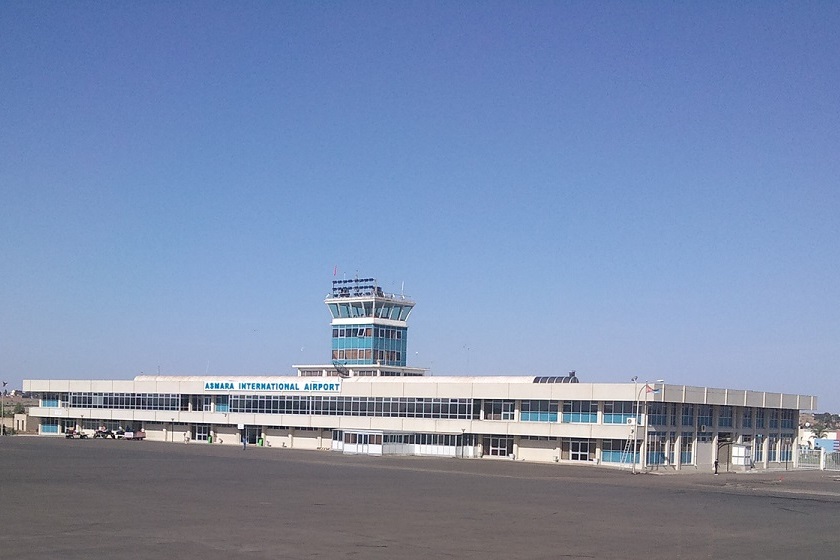
At any rate, we started our third engine by a run on the runway and then taxied back for takeoff, at Jedda. Our next stop was Asmara, Eritria. We spent the night there. This is 2500 meters high, too high for bigger planes.

I always liked the Eritreans I met and liked the layover there. Naturally, we started the 3rd engine on the runway and taxied back for our takeoff. And we went to Addis Ababa, in Ethiopia. We started #3 and taxied back for takeoff.

From Addis we flew to Cairo, Egypt. Here was the perfect opportunity to tell the US Airforce that we had a bad starter and NEEDED to have one sent to us. That guaranteed that we could have a layover in Cairo. During this time, under General Nasser”s leadership it was hard to get a layover there. It took about FIVE hours for the woman who we were working with to get us cleared into Cairo for our layover. Read about Nasser:

https://en.wikipedia.org/wiki/History_of_Egypt_under_Gamal_Abdel_Nasser

We went to our hotel and then we grabbed a taxi and headed for the pyramids and the Sphinx. I don’t remember his name, but my copilot was from Pennsylvania. On the taxi ride out into the desert, he was afraid we were being kidnaped. When we got out to the pyramids and standing in front of the Sphinx, he looked at the pyramids and said: “We have slag piles bigger than them where I grew up.”

There was a restaurant out out there and it’s entertainment was ending because it was getting late and the tourists were leaving. But we walked in and they had us sit at a big table. We told them they could let the orchestra leave, we didn’t need them for our dinner. They refused and kept them there and they played for us, as we ate the pile of lamb and goat chops that they provided.

The next morning, my friend Tom Stringer, my navigator, and that copilot went to the Cairo museum, but as aircraft commander, I went to the airport with the mechanic who installed the new starter. You see, the Air Force had rules that you were not allowed to make running starts on engines. We, as Navy pilots, didn’t pay too much attention to those rules, unless we were in Cairo.

From Cairo we started a run through Beirut and Incirlik to Chateauroux and got there on the 30th. We left for Wheelus on 2 November.

15 April 1965 Tehran

We left McGuire on the 5th of April and we got back on the 24th. In all that time we had been as far east as Tehran. Actually we were there four times in that stretch of time, and we stayed there for four days, from the 9th to the 12th. During that time we were amazed by how modern the attire was. Women were not rapped in veils and burkas. It was the time of Mohammed Raza Pahlavi, the Shah of Iran. You can read about him Here: https://en.wikipedia.org/wiki/Mohammad_Reza_Pahlavi

The first Shah of the Persians, Cyrus the Great, had taken that title 2500 years before the current Shah took the title and Cyrus ruled over 50 million people.

Pahlavi came to power after Mossadegh had NATIONALIZED the oil industry and the United Kingdom and the United States overthrew his father’s rule and reintroduced privately owned oil companies and brought the Shah to power.

I remember going up to a pool, with a small waterfall, just outside of Tehran where the Shah used to go with his harem. When we were there, they were washing huge Iranian carpets in the water and they were using TIDE soap. I know I took some pictures of that. I have to look for that picture. These guys took the wet carpets, folded up on their shoulder, climbed a little up the cliff and unfolded the carpet to let it dry in the sun. After a little while, the hill was covered in carpets and the colors were wonderful to see. Especially through the cloud of a little hashish smoke.

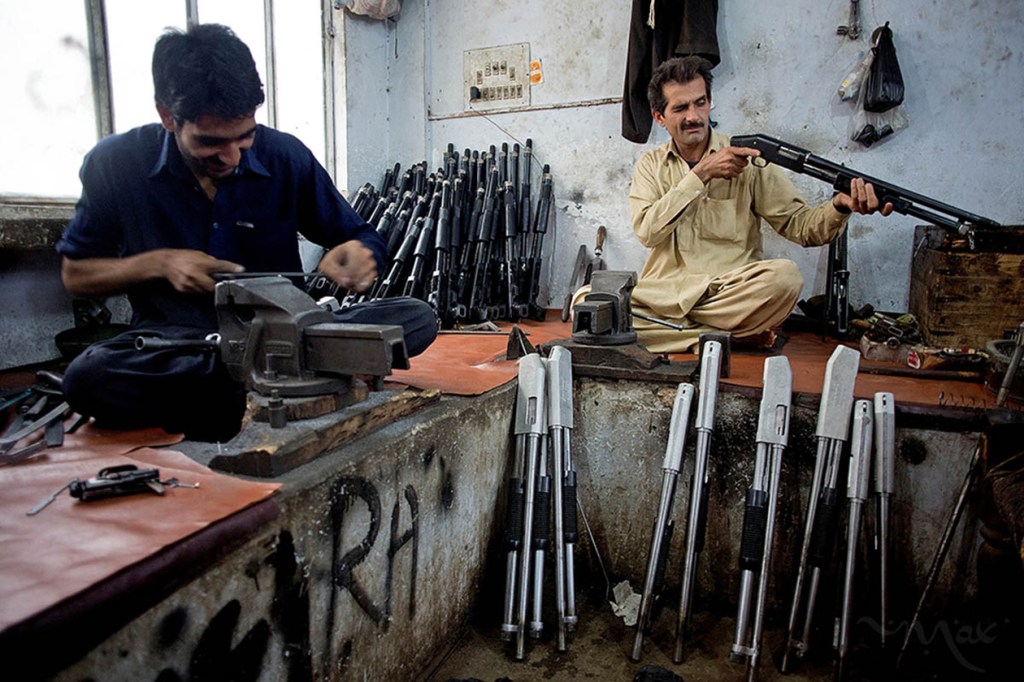
We went back and forth to Karachi and we stoped in Incirlik. We also had a layover in Peshawar, Pakistan. Tom Stringer was my Navigator on this trip and he and I went to the Khyber Pass and walked around the gun shops and ammunition dealers.

Later, in April, we were ordered by radio to stop at Peshawa and pick up some American families that were being evacuated due to a the war between India and Pakistan that had just started. We landed and we taxied toward the tower. We left one engine running and I climbed the wooden steps on the outside of the tower, to an office just below the tower. There was a Pakistan sergeant at a blackboard with chalk in his hand. He was controlling the traffic. I had NO IDEA how to speak to him, so I said: “We come in big plane down from sky and want to file flight plan to leave.” in a John Wayne voice. He looked at me and said: “Excuse me sir, but can I help you?” in perfect English and then it occurred to me how long the British had been out there. The wooden tower was gone in this image.

Well, we picked up the families and flew them to Karachi. There was a US Colonel with a wife and two kids and a couple of other wives. The Colonel was worried about my getting in trouble for bringing civilians in, on my airplane. He said he would figure out how to get transportation after they got away from the plane. I told him not to worry about it and told Karachi that I needed a bus to transport our passengers.

15 SEPTEMBER 1963

Well, civil rights really got accelerated here in Birmingham, Alabama. At 10:22 AM on this Sunday morning some Klu Klux Klan men killed four young black girls by setting of a bomb against the side of the 16th Street Baptist Church. You can look at this video:https://youtu.be/K5KqCMsHlq0

Do a little research on what it was like in the USA with fully visible racism in Birmingham with Governor George Wallace, Commissioner of Safety “BULL” Connor in Birmingham and J. Edgar Hoover as the head of the FBI. https://en.wikipedia.org/wiki/Bull_Connor

I got to Naval Air Transport Squadron Three, VR-3, at McGuire AFB in New Jersey in September of 1963. Since I grew up in NY City, I went home Friday evening on the 20th of September 1963. On my way to Corona, I stopped at the Village Voice in Greenwich Village to catch Nina Simone singing. I was alone and sat at a table. She came on stage and sang “Mississippi God Damn” for 45 minutes, alone, no band and got up and left the floor. Here is a video: https://youtu.be/LJ25-U3jNWM

Well, I really missed her singing and doing Jazz, so Sunday evening on the 22 of September, on the way back to McGuire I stopped at the Voice again to catch her midnight show. She walked out on stage and said” It’s midnight on Sunday night. The people here came to listen to some Jazz. Let’s do Jazz.” and she played for about an hour. Then I drove down to McGuire.

Medgar Evers was assassinated on June 12, 1963. You can read about him here:https://www.pbs.org/newshour/nation/media-jan-june02-evers_04-18

August 28, 1963

There was a march on Washington on this day in 1963. Many people attended and 200,000 people marched. Martin Luther King gave his “I have a Dream” speech and Bob Dylan sang at the Lincoln Memorial performing “When The Ship Comes In” with Joan Baez and “Only A Pawn In Their Game” solo before Martin Luther King, Jr. gave his remarkable speech. Check it out:

http://www.daysofthecrazy-wild.com/video-51-years-ago-bob-dylan-performed-march-was

https://kinginstitute.stanford.edu/encyclopedia/march-washington-jobs-and-freedom

1962

James Meredith wanted to attend the University of Mississippi (Ole Miss) in Oxford, Mississippi and the US Supreme Court ordered that he should be able to register there and get his degree there. But Ross Barnett, the Governor of Mississippi had segregationist ideals and conversations with both Jack and Bobby Kennedy could not get him to help them get Meredith registered. Here are a series of conversations you can read: http://americanradioworks.publicradio.org/features/prestapes/a1.html

So, the Kennedys tried to get Meredith into Ole Miss, in Oxford, without violence but it didn’t work. Federal Marshalls took Meredith into the university grounds and two men were killed in the mellay.

Though President Kennedy and Governor Barnett talked several more times, the rioting in Oxford forced both men to do what they wanted most to avoid: Barnett had to step aside without his valiant last stand, and Kennedy had to storm Mississippi with U.S. Army troops. Still, James Meredith achieved his goal: on Monday morning, October 1, 1962, he walked across the smoldering, battered campus of Ole’ Miss and registered for classes.

Historians say that President John F. Kennedy simply did not understand the depth and ferocity of Southern racism. The President thought segregation was illogical, and that a cogent argument could make that clear to Ross Barnett. But the Kennedy-Barnett calls show how hard it is for two leaders to work out a problem on the phone if they don’t speak the same political language.

Bob Dylan recorded OXFORD TOWN on 6 December 1962 in response to the Mississippi riots. Check it out:

Oxford Town

Bob Dylan

Oxford town, Oxford town
Everybody’s got their heads bowed down
Sun don’t shine above the ground
Ain’t a-goin’ down to Oxford town

He went down to Oxford town
Guns and clubs followed him down
All because his face was brown
Better get away from Oxford town

Oxford town around the bend
Come to the door, he couldn’t get in
All because of the color of his skin
What do you think about that, my friend?

Me, my gal, and my gal’s son
We got met with a tear gas bomb
Don’t even know why we come
We’re goin’ back where we came from

Oxford town in the afternoon
Everybody’s singin’ a sorrowful tune
Two men died ‘neath the Mississippi moon
Somebody better investigate soon.

1955

Emmet Till was murdered in Money, Mississippi after he said something to a white woman Carolyn Bryant. Read about it here: https://en.wikipedia.org/wiki/Emmett_Till

The lasting importance of the Till case was the remarkable political achievement of Emmett’s mother, Mamie Till Mobely, her friends and her allies, and the dozens of community organizations and institutions of Black Chicago that they were able to mobilize, to launch a huge national protest movement. What matters most about the men who tortured and murdered Emmett Till and the jury in Sumner who acquitted them is not their brutality or their short-lived victory, but instead what African American activists and their allies across the country were able to build from these outrages. The movement mobilized hundreds of thousands of people over the course of almost two years, raised an immense amount of civil rights money, including substantial startup funds for the Montgomery Bus Boycott, and greatly expanded the size and strength of the NAACP. Mamie Till Mobley and her friends and allies brought together a national network of powerful organizations that became some of the most important support for Martin Luther King, Jr. and what became a national mass movement for Black citizenship and equality, which really did not exist prior to the Till case.

THULE 20 JULY 1964

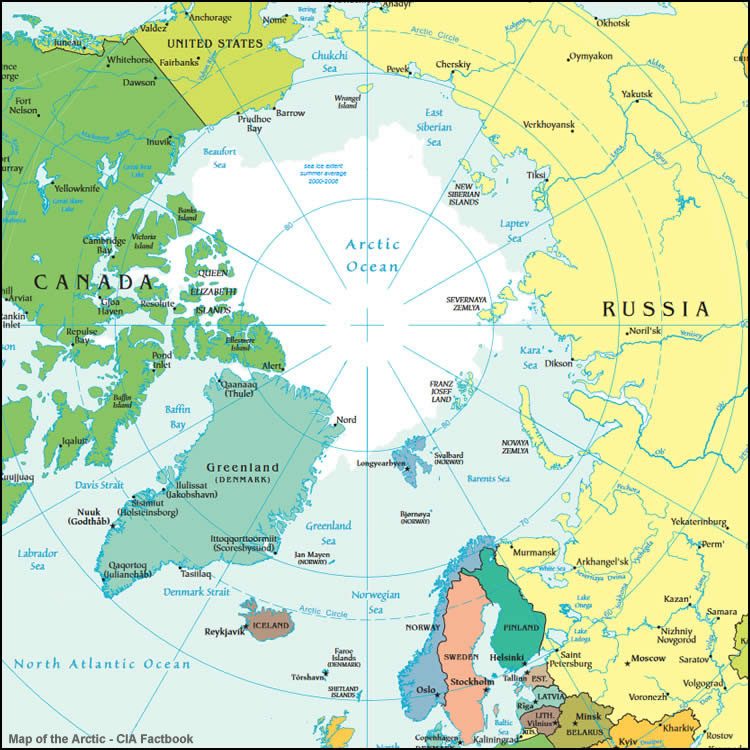
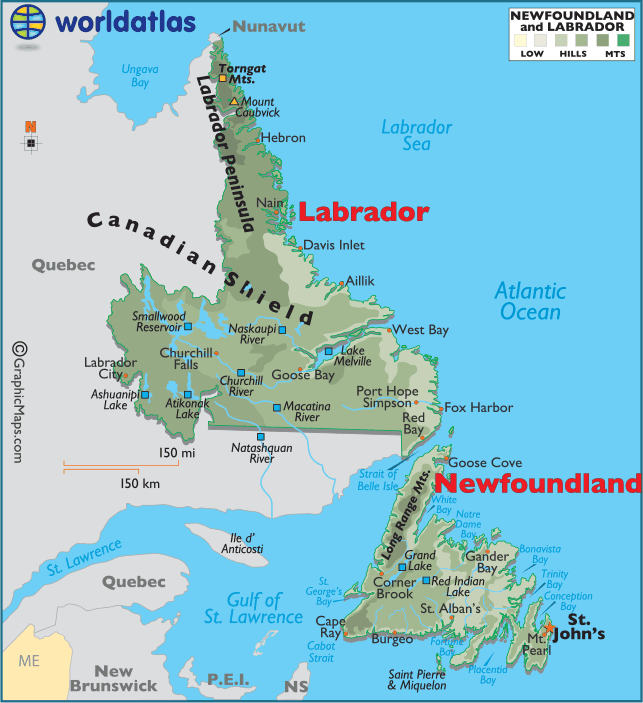
We left McGuire and flew to Goose Bay, Labrador. Then we flew up to Thule, Greenland.

It was our job to resupply various fields where people remained all winter. We had to go to Nord, Alert, and Eureka. In Thule, at this time of the year the sun is visible all night long. Outdoors all the buildings are connected by rope lines so you can find your way in a time of blowing snow. When we took off from Thule we had to worry about the weather at our destination, the weather at Thule and the weather at Sonderstom.

We had to bring a 35,000# Caterpillar tractor to Nord. The Headquarters for Military Air Transport gave a weight limit for takeoff from Thule. Nord was 765 miles from Thule. Our Alternate from Thule was Sonderstrom AFB and that was 660 miles away. With all that distance and the winds starting “white outs” at Thule and Nord, we had to cancel the delivery several times while we were airborne. Finally, we had to go to the Headquarters to allow lifting the takeoff weight to the C-130 limit.

When we got to Nord, on our third attempt, the sky below was perfectly clear and we started a penetration, went out to sea a little and turned back in to Nord. There was nothing we could see. The entire sky was covered in ice fog that was generated by our penetration. We came in at 50 feet and then thought of their large radio antennas. We held for about 30 minutes and the fog dissipated and we landed. Then we delivered the tractor.

At Eureka we went in and had lunch. The crowd was mostly Danish and we had a lot of fun with them. You can’t see Eureka on the map but you can fond Resolute. Eureka is across the bay.

It was very interesting to fly up here where the Magnetic North Pole is not really useable and we needed to use the True North Pole and Grid Navigation. It was wonderful to have a navigator to handle that, flying up there.

https://skybrary.aero/index.php/Grid_Navigation

24 October 1965

C-130 37835 was one of the C-130s we had at McGuire. This plane was used to fly to a remote airport in th US. A tower operator there knew that this would be the first four engine airplane that would land at this field. He set up his 8 millimeter motion picture camera to capture this landing. Here is that video:

Well, just after I became an Aircraft Commander, I was sent out on a trip to Europe. The aircraft I got was 37835 and after the accident it had, it had no wing tanks. I had to fly to Goose Bay, Labrador to get enough fuel to fly to Prestwick, Scotland.

On the 24th of October Goose had had a lot of snow that had been removed and piled on both sides of the runway. I was getting a Ground Controlled Approach (GCA) from the radar operator at Goose.

The strictest Check Pilot we had in VR-3 was Lieutenant Commander Norman Garsoe. It happened that Norm wanted to go to Rota, Spain because he was being re-assigned there and he wanted to see the housing that was available. Sure enough, he came on my first trip as an Aircraft Commander. In fact, as I was making this GCA he was looking over my shoulder. At about 300 feet above the ground, with large piles of snow on both sides of the runway, Norm said: “Tell me all the electrical components that are on the Battery Bus.”

I turned my head for a second to look at him and then it got to me that he was having some fun. I had to chuckle.

We ended this days flying in Chateauroux and went to the Swans for dinner.

23 September 1965

VR-3 wanted to have me check out as a C-130 Aircraft Commander but they did not want to have the Airlift Wing give them any grief. They arranged for the wing check airman, Commander Tufo, to give me the check ride and we left McGuire on September 23rd.

We went to Chateauroux, France and rested overnight. Check it out: http://www.chateaurouxairstation.com.

The next day we took off and headed east. Our destination was Topel. A Turkish Base where American soldiers were temporarily stationed. As we passed Athens, on our way into Turkey, they told us that the ceiling at Topel was 700 feet. It was still a bit of a flight to Topel and I said I would proceed and decide what to do when I got there.

Well, when we got up there, we spoke to planes coming out. They had stayed there overnight and they said the ceiling was 700 feet. If you look at this map you will find Yalova. That is a very small airport and I landed there several times. It had a radio navigational facility, an ADF Radio. When you wanted to make an approach to this field you could maneuver on the facility and lower yourself to 1100 feet. If you could SEE the runway from there, you could land.

Well, at 1100 feet, we would still be in the clouds. I briefed my crew. I said I would cross the ADF at 1100 feet. Then, I would fly north until we had water underneath us and I would lower myself to 500 feet. I would turn east to fly to Topelo. I said we would fly to the east end of the Sea of Marmara, cross the shore and look for the field. If we saw it, we would land and if we did not see it in three minutes after we reached the shore, we would execute a missed approach and return to Athens.

Well, that’s what we did. We saw the field, we landed, we picked up the troops and we left. I offered the check captain the leg back to Chateauroux and he said: “I’ll tell you when I want the leg.”

My copilot, Pete Simola, got really sick in Chateauroux, so I had the check pilot act as my copilot. We flew back to the States. We landed in Lages in the Azores and then went to Pope, to drop off the troops. Finally we went to McGuire. I never offered him a leg and he didn’t ask for a leg.

When we got to McGuire, he never said anything to me. It was late in the evening. My copilot and I went to the parking lot, he got in his car. It was a fancy Chevrolet that had a manual five speed transmission. He started yelling: “They’ve stolen my transmission.” So, I drove him home.

The next day, the Operations Officer called me and asked if I was qualified as an Aircraft Commander. I said: “I have no idea.” He said: “What happened.” I started to explain and he said: “Just come to my office.” So, I went into his office and explained what had happened. They called the Wing to find out what Commander Tufo had decided. They told us a letter was coming over to explain it.

Well, when the letter came the Commander opened it and read it. When they trained me as a pilot, they told me to do what I thought was the correct thing to do. That is what I did on the check ride. The Check Pilot praised me for having used the Navigation radio and adjusting the decent over water to 500 feet to enable completing the mission. He said he was pleased to elevate me to Aircraft Commander and hoped all the NEW pilots would do as well when they got checked. So, I was an Aircraft Commander.

November 22, 1963

I was in training at Sewart AFB in Nashville, Tennessee to be a pilot on the C-130 Hercules aircraft. We went flying in the morning and when we landed, we learned that President Kennedy was shot to death in Dallas, Texas. This assassination started a heartbreaking series of events that changed the direction of American politics to the right.

John F. Kennedy gave the following instructions to Defense Secretary Robert McNamara and General Maxwell Taylor, the Chairman of the Joint Chief of Staff, regarding the purpose of their mission to Vietnam:

“I am asking you to go because of my desire to have the best possible on-the-spot appraisal of the military and paramilitary effort to defeat the Viet Cong. . . . The events in South Vietnam since May have now raised serious questions both about the present prospects for success against the Viet Cong and still more about the future effectiveness of this effort unless there can be important political improvement in the country. It is in this context that I now need your appraisal of the situation. If the prognosis in your judgment is not hopeful, I would like your views on what action must be taken by the South Vietnamese Government and what steps our Government should take to lead the Vietnamese to that action.[1]”

In doing research for this post I discovered the JFK had decided to bring US troops home from Vietnam after McNamara/Taylor reported what was going on.

Look at this:
http://bostonreview.net/us/galbraith-exit-strategy-vietnam

I quote:

A more thorough treatment appeared in 1992, with the publication of John M. Newman’s JFK and Vietnam.1 Until his retirement in 1994 Newman was a major in the U.S. Army, an intelligence officer last stationed at Fort Meade, headquarters of the National Security Agency. As an historian, his specialty is deciphering declassified records—a talent he later applied to the CIA’s long-hidden archives on Lee Harvey Oswald.

Newman’s argument was not a case of “counterfactual historical reasoning,” as Larry Berman described it in an early response.2 It was not about what might have happened had Kennedy lived. Newman’s argument was stronger: Kennedy, he claims, had decided to begin a phased withdrawal from Vietnam, that he had ordered this withdrawal to begin. Here is the chronology, according to Newman:

(1) On October 2, 1963, Kennedy received the report of a mission to Saigon by McNamara and Maxwell Taylor, chairman of the Joint Chiefs of Staff (JCS). The main recommendations, which appear in Section I(B) of the McNamara-Taylor report, were that a phased withdrawal be completed by the end of 1965 and that the “Defense Department should announce in the very near future presently prepared plans to withdraw 1,000 out of 17,000 U.S. military personnel stationed in Vietnam by the end of 1963.” At Kennedy’s instruction, Press Secretary Pierre Salinger made a public announcement that evening of McNamara’s recommended timetable for withdrawal.

(2) On October 5, Kennedy made his formal decision. Newman quotes the minutes of the meeting that day:

The President also said that our decision to remove 1,000 U.S. advisors by December of this year should not be raised formally with Diem. Instead the action should be carried out routinely as part of our general posture of withdrawing people when they are no longer needed. (Emphasis added.)

The passage illustrates two points: (a) that a decision was in fact made on that day, and (b) that despite the earlier announcement of McNamara’s recommendation, the October 5 decision was not a ruse or pressure tactic to win reforms from Diem (as Richard Reeves, among others, has contended3) but a decision to begin withdrawal irrespective of Diem or his reactions.

(3) On October 11, the White House issued NSAM 263, which states:

The President approved the military recommendations contained in section I B (1-3) of the report, but directed that no formal announcement be made of the implementation of plans to withdraw 1,000 U.S. military personnel by the end of 1963.

In other words, the withdrawal recommended by McNamara on October 2 was embraced in secret by Kennedy on October 5 and implemented by his order on October 11, also in secret. Newman argues that the secrecy after October 2 can be explained by a diplomatic reason. Kennedy did not want Diem or anyone else to interpret the withdrawal as part of any pressure tactic (other steps that were pressure tactics had also been approved). There was also a political reason: JFK had not decided whether he could get away with claiming that the withdrawal was a result of progress toward the goal of a self-sufficient South Vietnam.

The alternative would have been to withdraw the troops while acknowledging failure. And this, Newman argues, Kennedy was prepared to do if it became necessary. He saw no reason, however, to take this step before it became necessary. If the troops could be pulled while the South Vietnamese were still standing, so much the better.4 But from October 11 onward the CIA’s reporting changed drastically. Official optimism was replaced by a searching and comparatively realistic pessimism. Newman believes this pessimism, which involved rewriting assessments as far back as the previous July, was a response to NSAM 263. It represented an effort by the CIA to undermine the ostensible rationale of withdrawal with success, and therefore to obstruct implementation of the plan for withdrawal. Kennedy, needless to say, did not share his full reasoning with the CIA.

So,; Kennedy made the decision on October 11th 1963 to pull our troops out. I knew that sadness fell on America after that assassination but I did not know that Kennedy died: so the military, industrial, congressional complex could make the money they made, in the next 60 years.